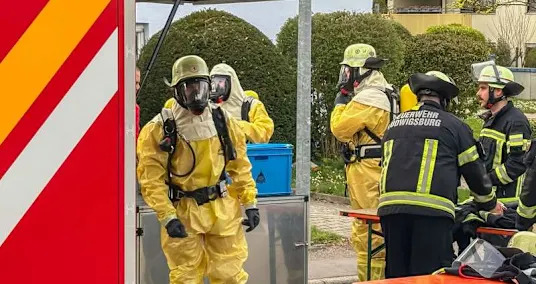
An Easter egg hunt in south-western Germany took a worrying turn on Sunday when two men discovered a vial labelled "Polonium 210" in a garden, triggering an emergency response as authorities tested for the potentially lethal radioactive substance.
District fire chief Andy Dorroch said initial on-site measurements were carried out to detect radioactivity, but all of them came back negative. He added that the two men were unharmed.
The discovery led to a large-scale operation involving the fire brigade and police in the town of Vaihingen an der Enz, north-west of Stuttgart.
It remains unclear whether the 50-millilitre vial actually contained polonium 210.
The fire brigade will secure the vial in accordance with safety precautions, the fire chief said.
Reports said the area around the site where the bottle was found was cordoned off.
According to the Federal Office for Radiation Protection (BfS), the chemical element polonium is particularly dangerous if inhaled or absorbed through the skin via open wounds.
LATEST POSTS
- 1
 Cygnus XL brings cargo to the ISS for 1st time | Space photo of the day for Dec. 1, 2025
 - 2Malaysian broadcaster rejects altered graphic about electricity rate hike
- 3Live long and loiter: Why NASA's ESCAPADE probes will wait a year in space before heading to Mars
- 4Select Your Cherished Fish
- 5Step into Nature: A Survey of \Handling Trails with Solace\ Climbing Shoes




- The World's Dazzling Regular Miracles
- Survey: Protected And Versatile Men's Razor
- Exploring Being a parent: A Survey of \Bits of knowledge and Guidance for Guardians\ Nurturing Book
- Curl Up With Some Hot Chocolate And Watch Mighty Car Mods Explore Japan In A Honda City Turbo II
- Cyclone Narelle turns Australian skies blood red in ‘apocalyptic’ scenes
- Doggie diversity in size and shape began at least 11,000 years ago
- Figure out How to Pick the Right Toothbrush for You
- 6 Novice Cameras for 2024: Ideal for New Picture takers
- He suddenly couldn't speak in space. NASA astronaut says his medical scare remains a mystery